Story 4 of 7
Piet Retief and Dingane, 1838
A land treaty, a royal capital, and the killing that changed the course of the Trek.
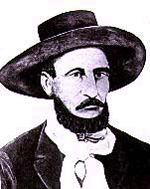
Of all the events of the Great Trek, none is remembered with more pain than the death of Piet Retief and his men at the capital of the Zulu king Dingane in February 1838. It led directly to the attacks on the trek camps and, ten months later, to Blood River.
Into Natal
Natal, the green, well-watered country between the Drakensberg mountains and the Indian Ocean, was the land many trekkers dreamed of. It also bordered the Zulu kingdom, the strongest African state in the region. Dingane had become king in 1828 after he and his brothers assassinated Shaka, the kingdom’s founder. A few British traders and hunters already lived at Port Natal (today Durban).
In October 1837 Retief led a small party over the Drakensberg ahead of the wagons. He visited Port Natal, then rode to Dingane’s royal town, uMgungundlovu, in November to ask for land. Dingane set a condition: Retief must first recover cattle that had been stolen from the Zulu by Sekonyela, chief of the Tlokwa, who lived on the highveld.
The cattle of Sekonyela
Retief went to Sekonyela and, by a trick, had him put in handcuffs until he handed over the cattle. Retief also took horses and guns from the Tlokwa. He did not hand those to Dingane, and the Zulu king may well have seen in this a warning of what such men could do.
At uMgungundlovu
Retief returned to uMgungundlovu at the beginning of February 1838 with the cattle and about 70 burghers (citizens) and boys, plus their Khoikhoi servants and an interpreter, perhaps 100 people in all. Several trekkers had warned him not to go with so many men, or not to go at all. For two days the visitors were entertained with dancing and displays by the Zulu regiments.
A document dated 4 February 1838 records Dingane granting the land between the Thukela and Mzimvubu rivers to the trekkers. On 6 February the party were invited, unarmed, as was the custom in the king’s presence, to a farewell. During the dancing Dingane is reported to have called out an order to kill the wizards. The visitors were seized, dragged to the hill of execution, kwaMatiwane, and killed. Retief, according to accounts, was killed last, after seeing his son and the others die.
The English missionary Francis Owen, who lived near the capital, watched from his house across the valley and recorded the events in his diary. It is our closest eyewitness source.
Why did Dingane do it?
Historians still debate this. Dingane had seen what armed horsemen had done to Mzilikazi’s Ndebele. He knew of the guns and horses Retief had taken from Sekonyela. Some scholars think he planned the killing in advance as a pre-emptive strike. Some even question whether he ever truly meant to grant land. What is clear is that he then sent his army against the trek camps.
The aftermath
On the night of 16–17 February, Zulu regiments fell on the scattered trek camps along the Bloukrans and Bushman’s rivers. Hundreds of Voortrekkers, many of them women and children, and their servants were killed. The area later became the town of Weenen, Dutch for “weeping.” In April 1838 a commando under Piet Uys and Hendrik Potgieter was defeated at Italeni, and Uys was killed.
In December 1838, after Blood River, Pretorius’s men reached the ruins of uMgungundlovu and found the remains of Retief’s party on kwaMatiwane. A leather bag with Retief was said to contain the land treaty.
Today a memorial to Retief and his men stands at kwaMatiwane, near the reconstructed royal enclosure at uMgungundlovu, close to the town of Eshowe.
Sources
- Francis Owen, The Diary of the Rev. Francis Owen (Van Riebeeck Society, 1926)
- SAHO, “Piet Retief”: sahistory.org.za
- John Laband, The Boer Invasion of the Zulu Kingdom 1837–1840 (2023)
- John Laband, Rope of Sand: The Rise and Fall of the Zulu Kingdom (1995)